
Accounting firm buyer guide

Best AI chatbot for accountants: capture deadline-season leads, never give tax advice.

An accounting-firm chatbot should make the front office faster: service questions answered from approved copy, new-client enquiries captured cleanly through deadline season, documents routed to the secure portal. It should not answer tax questions, quote unscoped fees, or accept financial documents in chat.

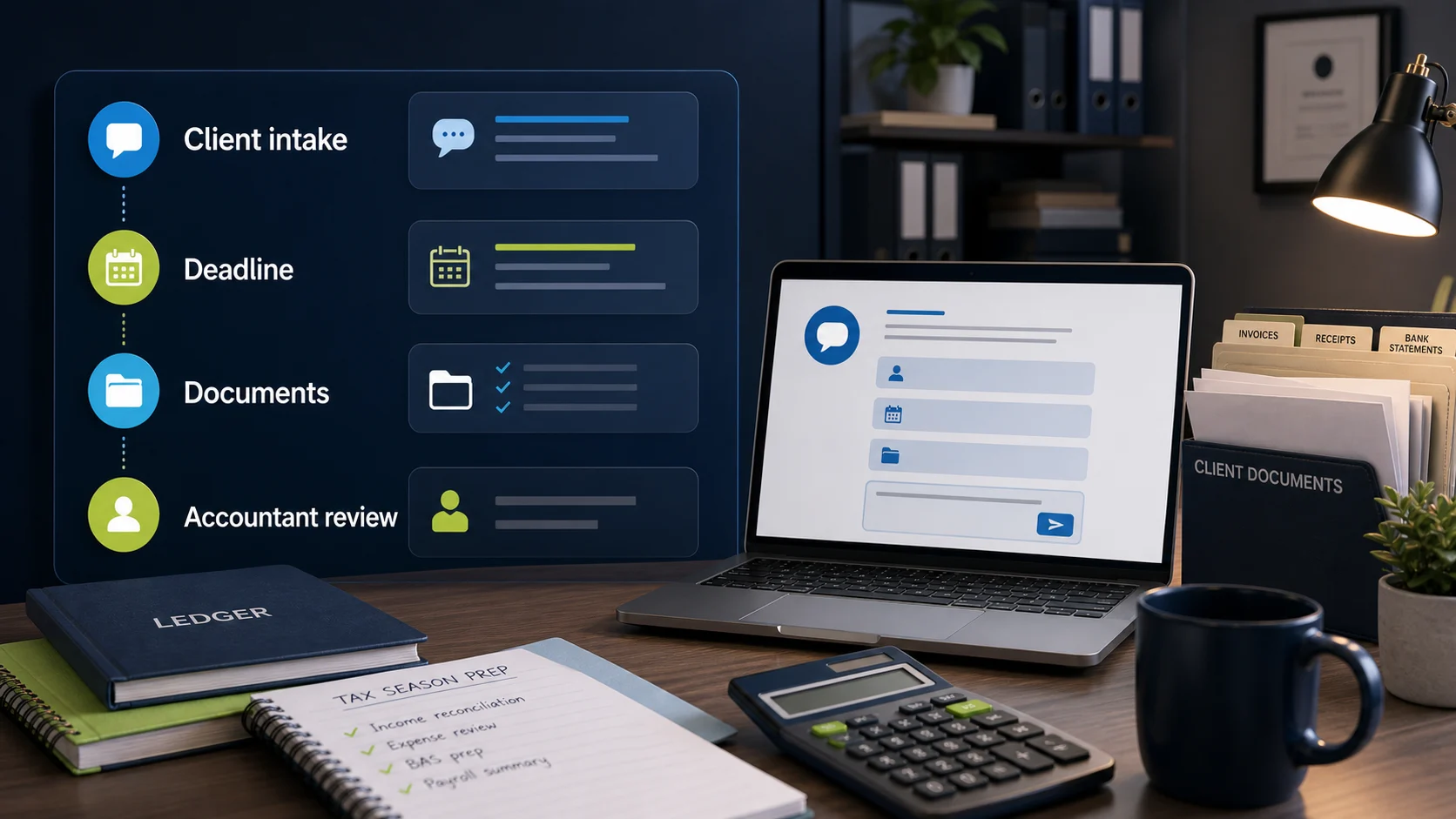
Accounting desk with chatbot client-intake checklist, deadline, document, and accountant-review cues.

What the visitor needs

Catch the enquiry, keep the judgment human.

A business owner asks at 10pm in March whether the firm can take on their return. The chatbot answers from approved copy, collects the enquiry, and routes the next step.

What the chatbot should collect

Need
Returns, bookkeeping, payroll
Context
Business type, size, timing
Risk
Tax advice, fees, documents
Handoff
Admin team, portal for documents

Safe for the chatbot

A cleaner callback list through the busiest weeks of the year without turning the chat widget into an advice or data problem.

Needs a person or approved process

No tax answers, unscoped fee quotes, deadline promises, or document and identifier intake in chat.

Short answer

Start with FastBots if you want a simple site-trained assistant for service questions and enquiry capture. Look at Chatbase if tightly controlled answers from approved firm pages matter most. Choose Tidio when the front office should take over chats live during business hours, and ChatBot.com when a larger practice wants designed intake flows and team features.

The first win is timing. The weeks before filing deadlines are when prospective clients are most motivated and the phone is least answered — a chatbot captures those enquiries around the clock, with the business type, service, and timing already attached.

Accounting adds two boundaries most industries do not have: client-specific tax questions belong to professionals, and financial documents and identifiers belong in the secure portal — a chat transcript is the wrong place for either.

Pricing snapshot

What the shortlist costs before you trial it.

One new bookkeeping client usually covers years of any plan here. Compare the current range and usage unit against your enquiry volume before choosing.
Current as of 1 June 2026 - 7 June 2026

FastBots

Website AI chatbot

Website chat Small websites that want a trained chatbot without a broader AI-agent buildout.
Cheapest paid plan $33/mo annually Essential plan

Monthly: $39/mo

Includes: 2,000 message credits/mo across 2 bots; standard replies use 1 credit.

Typical price range
$0 to $399/mo; main paid plans run $39-$199/mo
What raises the bill
Message credits (1 standard reply = 1 credit; advanced models use 5-10), chatbot count, handoff, and branding gates

Check current price

Chatbase

Trainable website chatbot

Website chat Teams with help pages, files, Q&A, Notion, or support-ticket sources to manage.
Cheapest paid plan $32/mo annually Hobby plan

Includes: 500 message credits/mo, 1 AI agent, and 5 AI Actions/agent.

Typical price range
$0 to $400/mo annually; Enterprise is custom
What raises the bill
Message credits, AI agents, source limits, actions, seats, and add-ons
Check current price

Tidio

Website chat and support

Live support Stores that need live chat, AI help, and human handoff in one workflow.
Cheapest paid plan $24.17/mo annually Starter plan

Includes: 100 billable conversations/mo; Lyro AI is separate, with the first 50 conversations lifetime free.

Typical price range
$24.17/mo Starter to $749/mo Plus; Premium is custom
What raises the bill
Billable conversations, Lyro AI conversations, Flows visitors reached, and seats
Check current price

ChatBot.com

AI support workspace

Website chat Teams comparing AI agent, live chat, shared inbox, ticketing, and workflows in one Text workspace.
Cheapest paid plan $19/user/mo Essential plan

Monthly: $25/user/mo

Includes: 1 AI agent, 10 AI resolutions/mo, and 10,000 API calls.

Typical price range
$19-$79/user/mo annually; Enterprise is custom
What raises the bill
Per-user pricing plus included AI agents, AI resolutions, API calls, and workflow allowances
Check current price

Accounting firm workflow

The bot should make the front office faster, not braver.

A useful accounting-firm chatbot is an intake and routing layer, not an advisor, fee calculator, or document channel. It separates routine firm questions from the professional judgment and regulated data that need people and the secure portal.

What matters most

What matters for accounting firms

A quick read on what matters for this buying decision.
Service and process questions Core job
New-client enquiry capture Deadline season
What-to-bring explanations Approved copy only
After-hours capture Missed-call leak
Human handoff Trust
Tax advice or document intake Never automate

Choose the right layer

Website chatbot, booking link, or practice system?

Intake language blurs three different jobs. Keep enquiry capture, meeting scheduling, and engagement-and-document workflows separate before choosing a tool.
01

Website layer

Firm website chatbot

Best for service descriptions, published package terms, what-to-bring explainers, office logistics, and capturing new-client enquiries for follow-up.
  • Service FAQs
  • Enquiry capture
  • What to bring
  • Callback path
02

Scheduling layer

Meeting booking link

Useful when prospects should book a discovery call or appointment through a scheduling tool the firm already trusts, with buffer rules around deadline season.
  • Discovery calls
  • Buffer rules
  • Reminders
03

Practice layer

Practice management and secure portal

Needed when the workflow touches client records, engagements, documents, identifiers, or filings — regulated data belongs in the portal, never in a chat widget.
  • Engagements
  • Secure documents
  • Identifiers
  • Filings

Shortlist

Which tool should you check first?

Current ChatbotEdge-reviewed tools that fit accounting-firm website work. Practice-management, portal, and filing systems are a separate category this guide does not score.

Lead capture

FastBots

Simple enquiry intake

Start here if

Practices that want a simple site-trained assistant for service questions, published package terms, what-to-bring explainers, and enquiry capture.

Before you choose

Treat it as intake plus follow-up by the admin team. Do not frame it as tax guidance, a fee calculator, or a channel for sending documents.
Check FastBots

Answer control

Chatbase

Source-controlled answers

Start here if

Practices that want tightly controlled answers from approved pages — services, pricing pages the firm publishes, process explainers — so the bot describes rather than improvises.

Before you choose

Source control reduces wrong answers; it does not make automated tax answers safe. Keep client-specific questions routed to a person.
Check Chatbase

Handoff

Tidio

Inbox and handoff

Start here if

Front offices that want AI answers plus live chat with operating-hours behavior, so a person can take over conversations during business hours.

Before you choose

Inbox handoff is the strength; keep fee quotes for unscoped work and anything client-specific out of automated replies.
Check Tidio

Flow design

ChatBot.com

Designed flow capture

Start here if

Larger or multi-office practices that want designed question flows, saved attributes, and team workspace features around new-client enquiries.

Before you choose

Designed flows collect cleaner requests, but per-user pricing scales with seats and flows are not proof of practice-management integration.
Check ChatBot.com

Enquiry flow

From prospective client to useful handoff.

Collect enough context for the team to respond faster, then stop before the chatbot becomes an advisor, fee schedule, or document channel.
01 Visitor asks

A prospective client lands

The visitor asks whether the firm takes new clients, what bookkeeping or a tax return costs, which software the firm works with, or how fast something can be filed — usually in the weeks before a deadline.

02 Bot collects

Capture the enquiry brief

Ask for name, contact details, business type and rough size, which service they need, and timing — without prompting for income figures, identifiers, or account numbers.

03 Boundary check

Keep advice and documents out of chat

The chatbot can answer from approved firm copy, but tax advice, fee quotes for unscoped work, and any exchange of financial documents or identifiers stay with people and the secure portal.

04 Handoff

Route to the firm

The admin team gets a clean callback list, deadline-pressed prospects get clear next steps, and nothing sensitive sits in a chat transcript.

What the chatbot should collect

The questions that make follow-up cleaner.

New-client enquiry

The visitor asks whether the firm takes new clients, serves their industry, or can handle their business size.

Answer from approved firm copy and collect contact details, business type, and which service they need for a callback.

Pricing question

The visitor asks what a tax return, monthly bookkeeping, or payroll costs.

Share only the package terms the firm publishes. For anything scoped — cleanup work, multi-entity, back-year filings — collect details and route to a person.

Tax question

The visitor asks whether something is deductible, which structure to choose, or what a notice means.

Do not answer the tax question. Explain that it needs a professional with their specifics, then offer the callback or booking path — that enquiry is exactly the lead the firm wants.

Deadline pressure

The visitor needs something filed soon, or has received a notice with a date on it.

Treat as priority: collect contact details and the deadline, set expectations from approved copy, and route to the team immediately. Never opine on whether the deadline can be met.

Document or identifier offered

The visitor starts typing account numbers, income figures, or wants to send statements through chat.

Redirect to the secure portal or engagement process without echoing details back. Financial documents and identifiers never travel through the chat widget.

Setup checklist

Set the rules before deadline season.

Define minimal intake fields: name, contact details, business type and rough size, service needed, and timing — with instructions not to prompt for income figures, identifiers, or account numbers.

Write approved wording for services, published package terms, industries served, software the firm works with, office hours, and what happens after an enquiry.

Add service pages, published pricing pages, what-to-bring checklists, and process explainers as training sources; exclude anything with client information.

Tell the chatbot to route, not advise: no tax answers, no fee quotes for unscoped work, no filing-deadline opinions, no document handling.

Point document exchange at the secure portal in every relevant answer, and tell the bot to redirect — not echo — any identifiers a visitor types into chat.

Send transcripts to the admin inbox and test new-client enquiries, pricing questions, deadline wording, identifier redirection, after-hours behavior, and handoff failures before expanding automation.

What the chatbot should not decide alone

Safe first jobs, and what a person should keep.

The safest accounting-firm chatbot gathers contact details and answers from approved firm copy. It should not touch professional judgment, scoped fees, or regulated data.

Safe first jobs

Collect new-client enquiry details

Name, contact details, business type and rough size, which service they need, and timing — in the visitor's own words.

Answer approved firm FAQs

Services, published package terms, industries served, software supported, office hours, and what-to-bring checklists from approved copy.

Route sensitive and urgent enquiries

Tax questions, notices, deadline pressure, and anything involving documents or identifiers go to the team or the secure portal immediately.

Keep with a person

Anything that is tax or accounting advice

Deductibility, entity structure, notices, and planning are professional judgments that depend on the client's facts — they belong to the accountants.

Fees for scoped work

Cleanup engagements, multi-entity returns, back-year filings, and audit support need a person who has actually seen the books.

Documents and identifiers

Statements, returns, payslips, and tax identifiers move through the secure portal under the firm's engagement process — never through chat.

Do not automate first

  • Tax or accounting advice of any kind — deductibility, structures, notices, planning — even hedged answers carry the firm's name.
  • Fee quotes beyond the package terms the firm already publishes on its site.
  • Collecting or accepting financial documents, account numbers, or tax identifiers in chat; redirect to the secure portal without echoing details.
  • Filing-deadline promises or opinions on whether a deadline can be met.
  • Client-record, engagement, or filing-system writes unless the integration is official, tested, permissioned, and reversible.
  • Anything client-specific for existing clients — route to the responsible accountant or the portal.

Specialist systems

When a chatbot is not enough.

If the real problem is document collection at scale, engagement letters, client reminders, or workflow through the busy season, that is practice-management and client-portal territory — a website chatbot only solves the first step of that funnel.

We kept this shortlist to tools ChatbotEdge can describe from official sources. None of them are practice-management, portal, or filing systems, and we do not claim otherwise.

A practical split: the website chatbot captures and qualifies the enquiry; the practice system owns engagements, documents, and filings. If missed phone calls are the bigger leak than website chats, fix that first — the lead-capture guide covers the phone-layer split.

Sources checked

What this guide is based on.

Product details change. Check current vendor docs before giving a chatbot any role beyond intake and approved-copy answers, and confirm regulated-data handling with your own advisor.

For the wider decision, the small-business chatbot picks page maps every starting point, the affordable chatbots guide compares entry prices, and the appointment-booking guide covers the calendar-specific claims.

FAQ

Accounting firm chatbot questions.

What should an accounting firm automate first with a chatbot?

Start with enquiry capture and service explanation: what the firm does (bookkeeping, tax returns, payroll, advisory), who it serves, published package terms if any, and collecting a callback request — name, contact, business type, rough size, and which service they need. Deadline season is the payoff: the weeks before filing deadlines are exactly when the phone is busiest and prospective clients give up fastest, and a chatbot captures those enquiries around the clock. Keep tax advice, fee quotes for unscoped work, and any exchange of financial documents or identifiers out of the chat.

Reviewed

Can an accounting firm chatbot answer tax questions?

It can answer questions about the firm — services, process, deadlines the firm publishes, what to bring to a first meeting — but it should not answer the visitor's tax questions. Whether something is deductible, which structure saves tax, or what a notice means are professional judgments that depend on the client's facts, and a wrong automated answer carries the firm's name. The safe split: firm and process questions from approved copy, general signposting to official resources where appropriate, and every actual tax question routed to a person with a clear next step.

Reviewed

Should clients send financial documents through an accounting firm's chatbot?

No. Tax file numbers, social security numbers, bank statements, payslips, and returns do not belong in a chat widget — transcripts pass through the chatbot vendor's systems, which are not designed as secure document channels for regulated financial data. The right pattern: the chatbot explains what documents the firm will need and then points to the firm's secure portal or engagement process for the actual exchange. If a visitor starts typing account numbers or identifiers into the chat, the bot should redirect to the secure channel without echoing the details back.

Reviewed

How do I pick an AI chatbot for a small business?

Pick by the job before you pick by the vendor. Write down the first lost conversation in plain English — missed enquiries from service pages, repeat product questions, DMs that go unanswered, support replies that pile up overnight, or quote requests that need a person. Then match the surface: a website chatbot for site pages, a social-DM tool for comments and DMs, a WhatsApp tool for WhatsApp follow-up, a support-workspace tool when tickets and team inbox matter. Only after the job and surface are clear should you compare plans, pricing units, and handoff. The [small-business chatbot plan picker](/guides/chatbot-plan-picker-small-business) walks through the same sequence.

Reviewed

Decision recap

Pick an accounting firm chatbot: the short version.

  • Start with FastBots — if the practice wants simple service answers plus enquiry capture from approved copy.
  • Check Chatbase — if tightly controlled answers from approved firm pages are the main concern.
  • Check Tidio — if the front office wants to take over chats live during business hours.
  • Check ChatBot.com — if a larger or multi-office practice needs designed flows and team features.
  • Route to the team or portal — for tax questions, scoped fees, deadlines, documents, identifiers, and existing clients.