Plumber buyer guide

Best AI chatbot for plumbers: capture the job before the phone rings.

A plumbing chatbot should not pretend to be a plumber. Its job is to collect the right details, answer from your own business content, and hand urgent or unclear jobs to a real person.

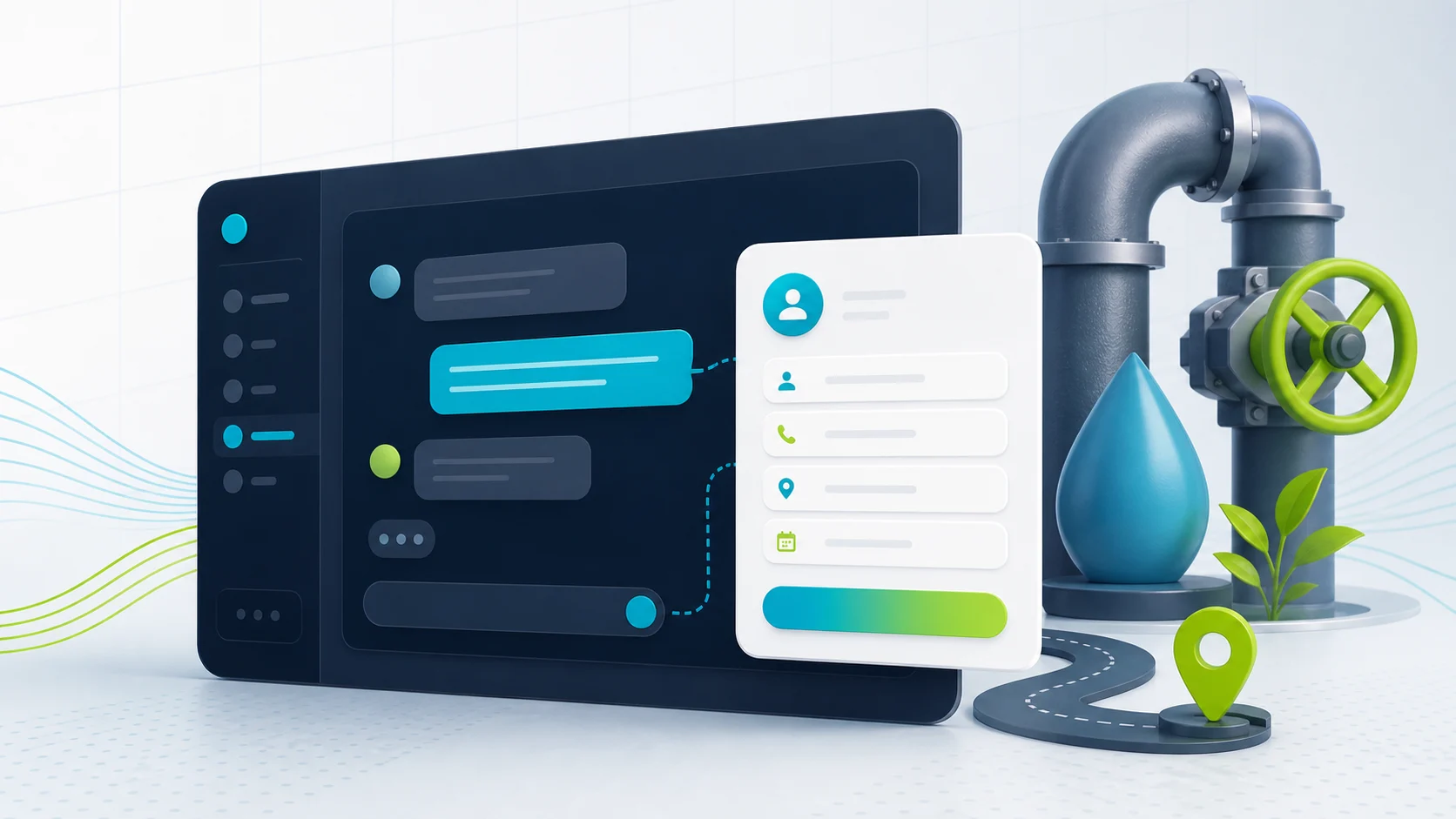
Editorial image showing a plumbing chatbot collecting leak and callback details.

The job in plain English

Capture the leak before the phone rings.

The visitor says a pipe is leaking after hours. The chatbot collects useful details and routes the job.

Ask for these details first

Location
Suburb and access notes
Issue
Leak, blockage, hot water
Urgency
Active water, damage, after hours
Handoff
Brief to the business

Let the bot help with

Cleaner lead details, or a controlled estimate from approved pricing sources or tested calculator actions, for callback, triage, or booking follow-up.

Needs rules or review

No diagnosis, model-invented final price, emergency promise, or dispatch decision.

Short answer

Start with FastBots if you want a straightforward website-trained assistant to collect better enquiries. Look at Chatbase if source control is the main risk. Choose Tidio if live chat and inbox handoff matter. Consider ChatBot.com when you want a broader support workspace rather than a simple lead form replacement.

The first win is not an AI that fixes plumbing problems. It is fewer missed enquiries and cleaner job briefs: suburb, urgency, service type, contact details, photos or description, and the right callback path.

For the quote boundary itself, use the AI chatbot quote-request guide: it separates intake, approved price ranges, tested calculator actions, and final pricing before you let the chatbot near booking or job-system actions.

For a lower-risk estimate-intake example outside emergency work, compare the AI chatbot for painters guide: it focuses on rooms, surfaces, photos, timing, and human quote review.

For a water-related service example that keeps chemistry, equipment repair, and route commitments human-reviewed, see the pool service chatbot guide.

Pricing snapshot

What the active shortlist costs before you trial it.

Price is a primary filter for small plumbing businesses, so compare the current range and usage unit before choosing a chatbot.
Current as of 2026-05-27

FastBots

Website AI chatbot

Entry paid $33/mo annually Essential plan

Monthly: $39/mo

Includes: 2,000 message credits/mo across 2 bots; standard replies use 1 credit.

Range
$0 to $399/mo; main paid plans run $39-$199/mo
Cost driver
Message credits (1 standard reply = 1 credit; advanced models use 5-10), chatbot count, handoff, and branding gates
Check vendor pricing

Chatbase

Trainable website chatbot

Entry paid $32/mo annually Hobby plan

Includes: 500 message credits/mo, 1 AI agent, and 5 AI Actions/agent.

Range
$0 to $400/mo annually; Enterprise is custom
Cost driver
Message credits, AI agents, source limits, actions, seats, and add-ons
Check vendor pricing

Tidio

Website chat and support

Entry paid $24.17/mo Starter plan

Includes: 100 billable conversations/mo; Lyro AI is separate, with the first 50 conversations lifetime free.

Range
$24.17/mo Starter to $749/mo Plus; Premium is custom
Cost driver
Billable conversations, Lyro AI conversations, Flows visitors reached, and seats
Check vendor pricing

ChatBot.com

AI support workspace

Entry paid $19/user/mo Essential plan

Monthly: $25/user/mo

Includes: 1 AI agent, 10+ AI resolutions/mo, and 10,000+ API calls.

Range
$19-$79/user/mo annually; Enterprise is custom
Cost driver
Per-user pricing plus included AI agents, AI resolutions, API calls, and workflow allowances
Check vendor pricing

Plumber workflow

The bot should make the callback easier.

A useful plumber chatbot is a filter, not a technician. It should separate urgent jobs from routine questions, collect the missing details, and avoid making promises about price, arrival time, or repair steps.

What matters most

What matters for plumbers

A quick read on what matters for this buying decision.
After-hours leads Core job
Job detail capture Core job
Service-area checks Reduce waste
Human handoff Trust
Booking path Test first
Final quoting Human review

First shortlist

Four tools to inspect first.

These are current ChatbotEdge-reviewed tools that can fit plumber website-chatbot work. Specialist AI receptionist or field-service platforms may be better if you need phone answering, dispatch-board booking, or trade-software sync.

FastBots

Best for

Plumbing websites that need a simple site-trained assistant to ask service-area, urgency, contact, and quote-prep questions before a callback.

Check before choosing

FastBots is strongest as lead intake first. Its own lead-generation page supports scheduling links and Zapier or Make handoff, but not live booking inside the chatbot by itself.

Check FastBots

Chatbase

Best for

Plumbers with service pages, FAQs, suburb rules, pricing notes, or PDFs they want the chatbot to answer from with tighter source control.

Check before choosing

Good source control still needs maintenance. Do not assume Chatbase Actions are safe for plumbing bookings or job workflows until that exact setup is tested.

Check Chatbase

Tidio

Best for

Plumbing teams that want AI plus live chat, ticketing, operating-hours handling, and a shared inbox for the office or owner.

Check before choosing

Tidio makes more sense when someone will manage the inbox. It is broader than a simple quote-request widget.

Check Tidio

ChatBot.com

Best for

Larger plumbing businesses that want a support workspace with a website widget, ticketing, workflow automation, reporting, and integrations.

Check before choosing

Treat it as a structured support setup, not a plumber-specific field-service tool. Check every downstream action before it touches bookings or quotes.

Check ChatBot.com

Intake flow

What the chatbot should collect before the callback.

Urgent job

The visitor has a burst pipe, blocked toilet, no hot water, flooding, or another time-sensitive issue.

Collect location and contact details, then route to the phone or emergency path the business controls.

Quote request

The visitor wants a price but has not explained access, job type, photos, or timing.

Ask for job type, suburb, urgency, property type, photos or description, and preferred callback time.

Service-area question

The visitor wants to know whether the plumber covers their suburb or postcode.

Answer from a clear service-area list and avoid guessing at edge suburbs.

After-hours enquiry

The visitor is browsing after the office is closed and wants to know what happens next.

Explain after-hours availability from approved copy, capture the brief, and set a realistic callback expectation.

Routine FAQ

The visitor asks about call-out fees, common services, warranties, prep steps, or how to send photos.

Answer from published service pages, pricing notes, policy snippets, or approved Q&A.

Setup checklist

Set the rules before you set it live.

Write the exact suburbs, postcodes, or service areas the chatbot can mention.

Create safe wording for emergency, after-hours, and callback situations.

Add service pages, FAQs, call-out fee notes, and policy snippets as sources.

Define the lead fields: name, phone, suburb, service type, urgency, description, and preferred callback time.

Tell the chatbot when to stop answering and send the visitor to a phone call.

Send every captured lead to a real inbox, dashboard, CRM, or workflow someone checks.

Review transcripts for missed questions before letting the bot near booking or quoting workflows.

Trust limits

What not to automate first.

The safest plumber chatbot is allowed to gather details, read approved pricing, and explain the next step. It should not diagnose the job, promise a final price from the model, or make emergency decisions that the business has not written and tested.

Diagnosing dangerous plumbing problems.

Step-by-step DIY repairs for risky issues.

AI-invented final quotes, price exceptions, arrival times, or emergency promises.

Booking, dispatch, or calendar edits that have not been tested.

ServiceM8, Jobber, Housecall Pro, Xero, or accounting sync unless the exact tool and workflow support it.

Anything that sounds like licensed advice or compliance advice.

Specialist tools

When a chatbot is not enough.

If the real problem is missed phone calls, dispatch-board booking, or field-service software handoff, a website chatbot may only solve part of it. That is where AI receptionist and trade-specific tools become worth comparing.

For this guide, we kept the shortlist to tools ChatbotEdge can describe from official sources. We do not claim those tools are native plumbing dispatch systems.

A practical split: use a website chatbot to capture and qualify the enquiry; use a specialist phone or job-management layer when you need live call answering, dispatch, calendar, or accounting workflows.

Sources checked

What this guide is based on.

Product details change. Check the current vendor docs before giving a chatbot permission to handle bookings, quotes, job systems, or customer promises.