
FastBots
Website AI chatbot- Range
- $0 to $399/mo; main paid plans run $39-$199/mo
- Entry paid
- Essential is $39/mo, or $33/mo when billed annually
- Check
- Message credits, chatbot count, human takeover, and branding removal gates
Painter buyer guide
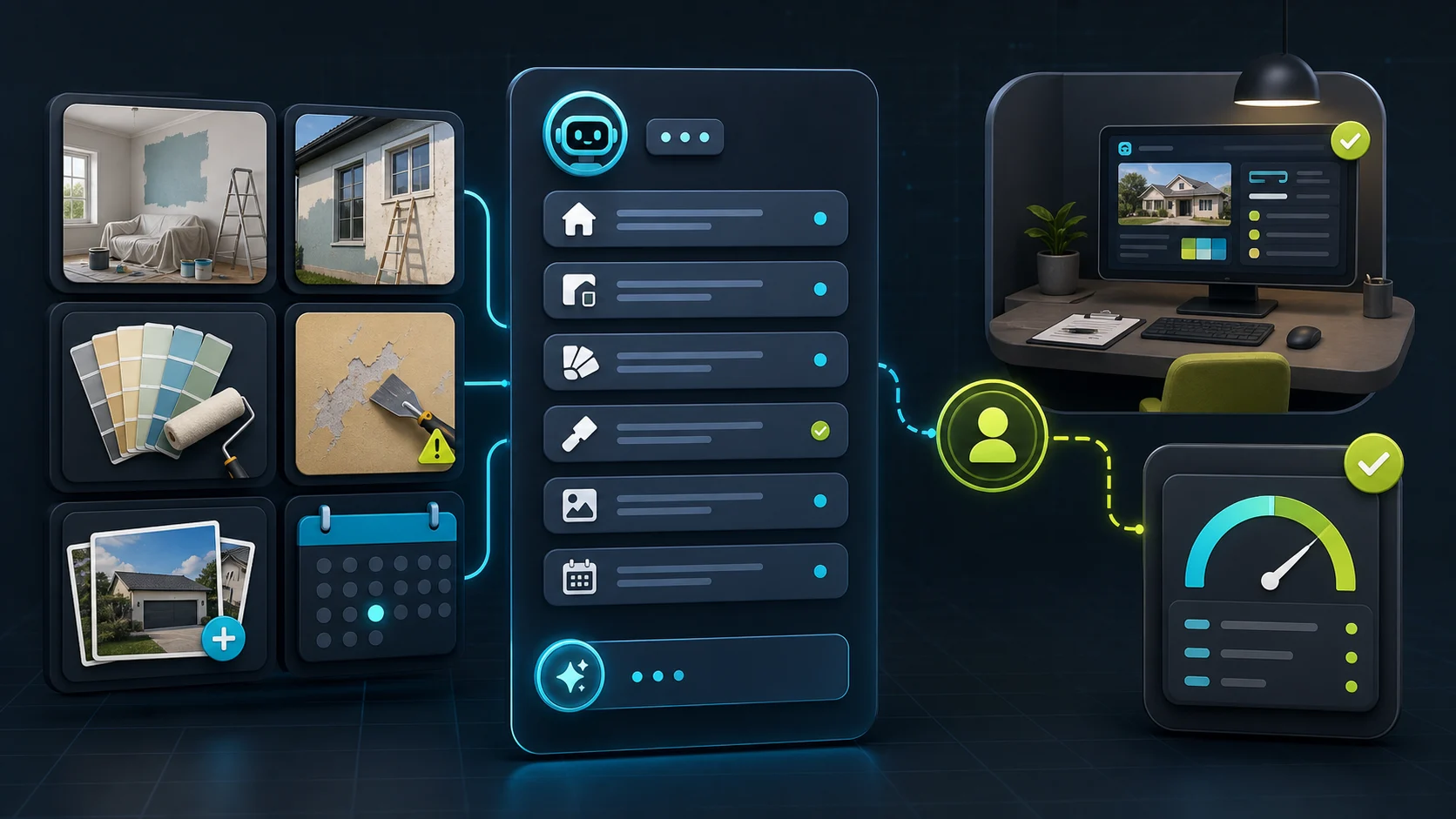
A painting chatbot should not price the job, judge surfaces, or promise a crew. Its job is to collect the brief, answer from approved business content, and route the estimate request to a qualified person.
Painter intake
Boundary
No final price, surface diagnosis, product promise, crew commitment, or booking confirmation.Outcome
Cleaner estimate requests without turning the chatbot into a painting estimator.Start with FastBots if you want a straightforward site-trained assistant to collect painting estimate requests. Look at Chatbase if approved-source control is the main risk. Choose Tidio if live chat, tickets, and inbox handoff matter. Consider ChatBot.com when you want designed question flows and a broader support workspace.
The first win is not a bot that prices a whole repaint from one message. It is fewer missed enquiries and better estimate briefs: project type, rooms or exterior areas, surfaces, condition, photos, timing, access notes, contact details, and a clear callback path.
For the broader price boundary, use the AI chatbot quote-request guide: it separates intake, approved price ranges, human review, and final pricing before you connect booking or job-system actions.
For another photo-heavy service vertical where the safety boundary is sharper, compare the pool service chatbot guide: it keeps chemistry, repair, route, and billing decisions out of the bot.
Keep the chatbot as intake and routing. Prep scope, surface condition, product choice, final estimate, crew availability, and customer commitments should stay with a qualified person and the business's approved process.
Pricing snapshot
Painting workflow
A useful painting chatbot is an intake and routing layer, not an estimator, surface inspector, color consultant, proposal system, crew calendar, or payment workflow. It should separate routine estimate requests from surface, prep, access, product, and schedule questions that need a person.
Workflow weighting
Fit map
Best first use
Useful intake
Estimate context
Approved pages
Required for price
Proof needed
Do not automate
Choose the right layer
Website layer
Reception layer
Ops layer
Tool-fit matrix
Simple estimate intake
Best when
Painting contractors that want a simple site-trained assistant to collect name, phone, suburb, project type, rooms or areas, surface notes, photos, timing, and preferred quote or callback path.Check
FastBots is best treated as lead and estimate-request intake first. Its official lead-generation page supports qualifying questions, contact capture, lead storage, email notifications, scheduling-link context, and Zapier or Make handoff. Do not turn that into a claim of final painting estimates or confirmed crew scheduling without testing the exact workflow.Source-controlled assistant
Best when
Painters with service pages, prep policies, color-consultation notes, surface caveats, warranty copy, service-area rules, and FAQs they want the chatbot to answer from carefully.Check
Chatbase supports source-controlled answers, lead forms, and custom actions, but those are not proof of a safe painting estimator. Treat actions as a capability to evaluate before they touch measurements, proposals, CRM writes, deposits, or booking workflows.Inbox and handoff workflow
Best when
Painting businesses that want AI plus live chat, tickets, operating-hours handling, and an inbox where the owner, office manager, or estimator can pick up quote-sensitive conversations.Check
Tidio fits better when a real person owns the inbox and handoff rules. Treat final price, product recommendations, crew availability, booking confirmation, deposits, and operational promises as human-reviewed workflows until tested.Designed flow capture
Best when
Larger painting teams that want designed question flows, saved visitor attributes, lead lists, LiveChat transfer, reporting, and broader support-workspace features.Check
ChatBot.com is useful for structured intake, but flow design does not make it a painting estimator. Check every downstream action before it touches proposals, discounts, bookings, invoices, payments, or customer commitments.Estimate intake flow
The visitor asks about interior painting, exterior painting, cabinets, trim, touch-ups, color changes, or repaint timing.
Ask for project type, rooms or areas, surfaces, approximate size, condition, photos, colors if known, timing, access notes, and contact details.
The chatbot can explain the quote process and collect photos, but final pricing, prep scope, product choice, and crew promises stay with people.
The owner, estimator, office manager, or sales team gets the context needed to reply faster without pretending the bot inspected the job.
What the chatbot should collect
The visitor wants a room, apartment, floor, or whole-house interior quote.
Collect rooms or areas, surfaces, approximate dimensions if known, ceiling height, trim or doors, condition, furniture/access notes, photos, timing, and contact details.
The visitor asks about siding, stucco, brick, render, fences, decks, doors, trim, or a whole exterior repaint.
Ask for property type, areas, access constraints, surface condition, peeling or damage, photos, timing, and whether an inspection or callback is preferred.
The visitor asks about cabinets, built-ins, stairs, doors, baseboards, windows, feature walls, or specialty finishes.
Collect photos, quantity, finish expectations, current condition, access notes, timeline, and route to a human before quoting materials, prep, or labor.
The visitor mentions peeling paint, cracks, water stains, wallpaper, texture, lead paint, mold, rot, overspray, or previous coating failure.
Capture the concern and photos, explain that prep scope affects the quote, and route to a qualified person. Do not diagnose hazards or promise repair pricing.
The visitor asks about service areas, quote process, minimums, color consults, paint brands, warranty, scheduling, insurance, or what happens before a visit.
Answer from approved pages and policy snippets. Stop before making final price, product, schedule, warranty, or crew commitments.
Setup checklist
Define the estimate fields: contact details, suburb or postcode, project type, interior or exterior, rooms or areas, surfaces, approximate size, condition, photos, colors if known, timing, and preferred callback path.
Write approved wording for starting prices, minimums, quote-required work, prep caveats, color consultation, paint-product limits, warranty notes, and photo instructions.
Add service pages, interior/exterior pages, cabinet pages, prep-policy notes, warranty copy, service-area pages, quote-process copy, and FAQs as sources.
Tell the chatbot to collect context and route the lead, not decide prep scope, product suitability, labor time, final price, crew availability, or project start date.
Send captured leads and transcripts to an inbox, CRM, sheet, estimator, owner, or workflow that a person checks.
Review transcripts before letting the bot near proposal generation, booking confirmation, deposits, invoices, payments, discounts, or job-management systems.
Automation boundary
Ask for project type, rooms or exterior areas, surfaces, rough size, condition, photos, timing, access notes, contact details, and preferred callback path.
Use service pages, process copy, minimums, warranty notes, color-consultation language, prep caveats, and FAQ answers the business has approved.
Send large jobs, prep-heavy surfaces, damaged substrates, unclear photos, urgent deadlines, or product questions to the approved human handoff path.
Final estimate, measurements, prep scope, coats, product choice, exclusions, warranty language, and discounts need a person and the business's approved quote process.
Do not let the chatbot diagnose lead paint, mold, rot, water damage, coating failure, access hazards, substrate suitability, or repair requirements.
Confirmed visit times, crew availability, project start dates, deposits, invoices, payments, and job-management updates need proven human-reviewed workflows.
Do not automate first
Specialist tools
If the real problem is measurement, proposal generation, production scheduling, deposits, invoicing, payments, accounting, crew calendars, or repaint follow-up, a website chatbot may only solve the first step.
For this guide, we kept the shortlist to tools ChatbotEdge can describe from official sources. We do not claim those tools are native painting estimating, proposal, measurement, production, payment, accounting, or field-service systems.
A practical split: use a website chatbot to capture and qualify the enquiry; use a specialist estimating, phone, or job-management layer when you need measurements, formal proposals, crew scheduling, deposits, invoices, payments, or production workflows.
Sources checked
Product details change. Check the current vendor docs before giving a chatbot permission to handle estimates, proposals, confirmed visits, discounts, deposits, payments, accounting, or customer promises.